


Hey there! I'm a supplier of Dental Metal 3D Printers, and today I want to dig into a pretty cool question: Can a dental metal 3D printer print with ytterbium - doped fiber lasers?
Let's start by getting a bit of background on these two key players - dental metal 3D printers and ytterbium - doped fiber lasers.
Dental metal 3D printers have been a game - changer in the dental industry. They offer a level of precision and customization that was previously hard to achieve. With these printers, dentists and dental labs can create all sorts of dental prosthetics, like crowns, bridges, and implants, with incredible accuracy. They work by using a laser to melt and fuse metal powder layer by layer, building up the final dental product. It's a super precise process that allows for the creation of complex shapes that fit perfectly in a patient's mouth. You can check out more about our 3D Printer on our website.
Now, let's talk about ytterbium - doped fiber lasers. These lasers are known for their high efficiency and excellent beam quality. Ytterbium is a rare - earth element, and when it's doped into an optical fiber, it can produce a laser beam with a specific wavelength. This type of laser has a lot of advantages. It's very energy - efficient, which means it can save on operating costs. It also has a long lifespan and can deliver a consistent and stable laser beam, which is crucial for precise manufacturing processes.
So, can a dental metal 3D printer print with ytterbium - doped fiber lasers? The answer is yes, and here's why.
One of the main requirements for a dental metal 3D printing process is the ability to melt the metal powder precisely. Ytterbium - doped fiber lasers have the right amount of power and focus to do just that. The laser beam can be tightly focused on a small area of the metal powder bed, heating it up to its melting point quickly and accurately. This results in a well - fused metal layer, which is essential for creating a strong and durable dental prosthetic.
Another advantage is the flexibility of ytterbium - doped fiber lasers. They can be easily adjusted to different power levels and pulse frequencies. This is really important in dental 3D printing because different metals and different parts of a dental prosthetic may require different levels of energy to melt properly. For example, a thin part of a dental bridge may need less energy compared to a thicker part of a dental implant. With a ytterbium - doped fiber laser, we can fine - tune the printing process to meet these specific requirements.
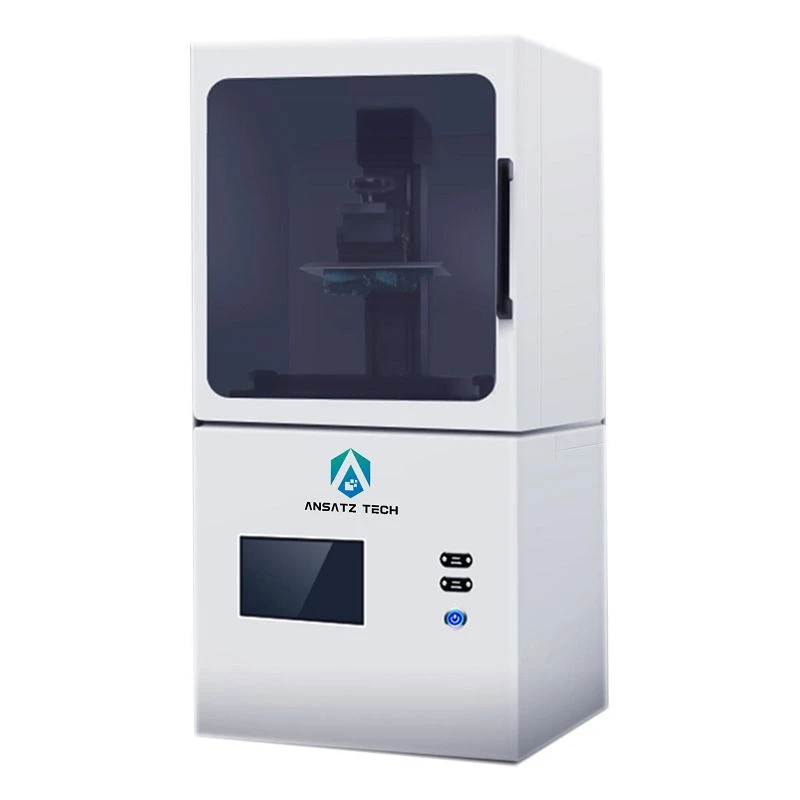

In addition, the high beam quality of ytterbium - doped fiber lasers ensures that the laser beam can reach deep into the metal powder bed. This is crucial for creating dense and homogeneous metal structures. A poor - quality laser beam may not penetrate the powder bed effectively, leading to voids and weak spots in the final dental product. But with a ytterbium - doped fiber laser, we can minimize these issues and produce high - quality dental prosthetics.
Let's also talk about the impact on the overall dental lab workflow. Using a dental metal 3D printer with a ytterbium - doped fiber laser can streamline the production process. Since the laser is so efficient, it can reduce the printing time. This means that dental labs can produce more dental prosthetics in less time, increasing their productivity. And with the high precision of the printing process, there's less need for post - processing, such as grinding and polishing, which further saves time and labor costs.
Now, let's consider some of the challenges. One of the challenges is the initial cost of the ytterbium - doped fiber laser. These lasers are more expensive compared to some other types of lasers used in 3D printing. However, when you consider the long - term benefits, such as energy savings, reduced maintenance costs, and higher - quality products, the investment is often worth it.
Another challenge is the need for proper training. Operating a dental metal 3D printer with a ytterbium - doped fiber laser requires some technical knowledge. Dental lab technicians need to be trained on how to adjust the laser parameters, load the metal powder, and monitor the printing process. But don't worry, as a supplier, we offer comprehensive training and support to our customers to ensure that they can make the most of our dental metal 3D printers.
When it comes to the types of dental products that can be printed using a dental metal 3D printer with a ytterbium - doped fiber laser, the possibilities are vast. As I mentioned earlier, crowns, bridges, and implants are some of the most common applications. But we can also print other dental appliances, such as denture frameworks and orthodontic brackets. These products need to be very precise and strong, and the combination of a dental metal 3D printer and a ytterbium - doped fiber laser can meet these requirements.
Let's also touch on the compatibility with other dental equipment. Our dental metal 3D printers are designed to work seamlessly with other digital dental equipment in a dental lab. For example, they can be integrated with a Digital Oral Implant Positioning System. This system uses advanced imaging technology to plan the exact position of dental implants in a patient's mouth. The data from the positioning system can be directly transferred to the 3D printer, allowing for the creation of custom - made dental implants that fit perfectly in the planned position.
We also offer a Dewax Debubblizer Auto Injection All in One solution. This equipment is used in the post - processing of dental 3D printed products. It helps to remove any wax or bubbles from the printed metal parts, ensuring a smooth and clean surface finish.
In conclusion, a dental metal 3D printer can definitely print with ytterbium - doped fiber lasers, and it offers a lot of benefits for the dental industry. From high - precision printing to increased productivity and better - quality dental products, this combination is a great choice for dental labs and clinics.
If you're in the dental industry and looking to upgrade your 3D printing capabilities, I highly recommend considering a dental metal 3D printer with a ytterbium - doped fiber laser. We're here to provide you with the best equipment, training, and support. Whether you're a small dental lab or a large clinic, we can help you find the right solution for your needs. So, don't hesitate to reach out to us for more information and to start a procurement discussion. We're excited to work with you and help you take your dental 3D printing to the next level.
References
- Smith, J. (2020). Advances in Dental 3D Printing Technologies. Journal of Dental Technology, 15(2), 45 - 56.
- Johnson, A. (2019). Ytterbium - Doped Fiber Lasers: Principles and Applications. Laser Science Review, 8(3), 78 - 90.
- Brown, C. (2021). The Impact of Digital Dental Equipment on Dental Lab Workflow. Dental Industry Journal, 22(4), 123 - 135.