


Hey there! As a supplier of burs for metal, I've heard a lot of complaints about the noise when using these tools. It's not just annoying; it can also be a real pain in the neck when you're trying to focus on your work. So, I thought I'd share some tips on how to reduce that noise and make your metal - working experience a whole lot better.
First off, let's understand why burs for metal make so much noise in the first place. When a bur spins at high speeds and comes into contact with metal, it creates vibrations. These vibrations then travel through the tool and the work - piece, and eventually reach our ears as noise. The type of metal, the speed of the bur, and the cutting conditions all play a role in how loud the operation gets.
Choose the Right Bur
One of the most important steps in reducing noise is to pick the right bur for the job. Different burs have different cutting geometries, and some are designed to be quieter than others. For example, burs with a more aggressive cutting edge might make more noise because they're removing material more forcefully. On the other hand, burs with a finer cutting edge can often cut through metal more smoothly, resulting in less vibration and noise.
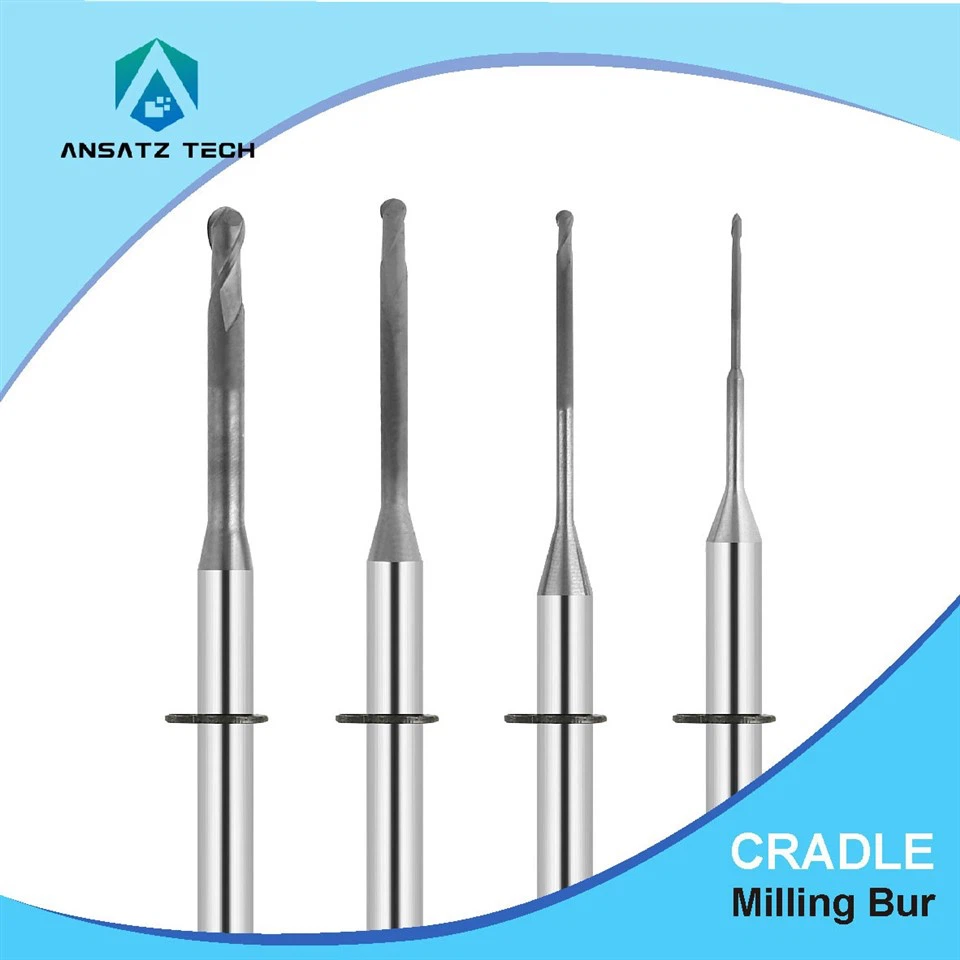
We offer a wide range of burs for different metal - working needs. Check out our Dental Milling Bur For Aidite Systems, Dental Milling Bur For Cradle Systems, and Dental Milling Bur For ARUM Systems. These burs are designed with precision to ensure a smooth and relatively quiet cutting process.
Optimize the Cutting Speed
The speed at which you run your bur can have a huge impact on the noise level. Running the bur too fast can cause excessive vibration and noise. You see, when the speed is too high, the bur might not be able to remove the metal in a controlled way. It could start to chatter, which is a major source of noise.
On the flip side, running the bur too slow might not be efficient, and it can also cause uneven cutting, leading to more noise. You need to find that sweet spot. Usually, the manufacturer's guidelines will give you a recommended speed range for the bur and the type of metal you're working with. Stick to these guidelines as closely as possible, and you'll notice a significant reduction in noise.
Use Proper Lubrication
Lubrication is like magic when it comes to reducing noise during metal cutting. When you apply a lubricant to the cutting area, it helps to reduce friction between the bur and the metal. Friction is one of the main causes of vibration and noise.
There are different types of lubricants available, such as cutting oils and coolants. Cutting oils are great for general metal - working tasks. They form a thin film between the bur and the metal, allowing the bur to glide more smoothly. Coolants, on the other hand, not only reduce friction but also help to dissipate heat. Heat can cause the bur to wear out faster and can also increase the noise level.
Make sure to apply the lubricant evenly and consistently throughout the cutting process. This will keep the cutting operation smooth and quiet.
Secure the Work - Piece Properly
If your work - piece isn't held firmly in place, it can move around during the cutting process. This movement can cause the bur to bounce and create a lot of noise. You need to use proper clamps or fixtures to secure the metal.
When the work - piece is stable, the bur can cut through it in a more controlled manner. This reduces the chances of vibration and noise. Take your time to set up the work - piece correctly before you start cutting. It'll make a big difference in the long run.
Maintain Your Burs
A dull or damaged bur is going to make a lot more noise than a sharp one. Over time, the cutting edge of the bur can wear down, and it might start to chip or break. When this happens, the bur won't be able to cut through the metal efficiently, and it'll create more vibration and noise.
Regularly inspect your burs for signs of wear and tear. If you notice that the cutting edge is dull, it's time to replace the bur. Also, make sure to clean your burs after each use. Buildup of metal chips and debris can affect the performance of the bur and increase the noise level.

Dampen the Vibrations
Another way to reduce noise is to dampen the vibrations that the bur creates. You can use vibration - damping materials, such as rubber pads or foam, to isolate the tool and the work - piece from the surrounding environment.
Place these damping materials between the workbench and the work - piece or around the tool itself. They'll absorb some of the vibrations and prevent them from spreading, which in turn reduces the noise.
Consider the Work Environment
The environment where you're doing your metal - working can also affect the noise level. If you're working in a small, enclosed space, the noise can bounce off the walls and seem even louder. Try to work in a well - ventilated and open area if possible.
You can also use sound - absorbing materials, like acoustic panels, to line the walls of your workspace. These panels will help to reduce the echo and make the overall noise level more bearable.
So, there you have it! These are some of the best ways to reduce the noise when using burs for metal. By following these tips, you can make your metal - working experience more pleasant and productive.
If you're interested in our high - quality burs for metal and want to learn more about how they can help you with your projects, don't hesitate to reach out. We're always here to answer your questions and help you find the right tools for your needs. Let's start a conversation about your procurement requirements, and we'll work together to get you the best solutions.
References
- Smith, J. (2018). Metal Cutting Handbook. Industrial Press.
- Johnson, A. (2020). Noise Reduction in Manufacturing Processes. Journal of Manufacturing Science.