


As a supplier of 3D printers, I've witnessed firsthand the transformative power of this technology across various industries. 3D printing, also known as additive manufacturing, has revolutionized the way we create objects, from simple prototypes to complex, end - use parts. In this blog, I'll explore the different types of 3D printers available in the market, highlighting their unique features, advantages, and applications.
Fused Deposition Modeling (FDM)
Fused Deposition Modeling, commonly referred to as FDM, is one of the most widely used 3D printing technologies. It works by extruding a thermoplastic filament through a heated nozzle, which melts the material and deposits it layer by layer to build the desired object.
The simplicity and affordability of FDM printers make them a popular choice for hobbyists, educators, and small - scale manufacturers. They are relatively easy to operate and maintain, and a wide range of materials are available, including PLA (polylactic acid), ABS (acrylonitrile butadiene styrene), and PETG (polyethylene terephthalate glycol).
One of the main advantages of FDM is its ability to produce large - scale objects. Since the process is based on layer - by - layer deposition, there are fewer limitations on the size of the printed part compared to some other 3D printing technologies. However, FDM prints may have visible layer lines, which can affect the surface finish of the object. This can be mitigated through post - processing techniques such as sanding and polishing.
FDM printers are commonly used in rapid prototyping, where quick and cost - effective production of prototypes is required. They are also used in the production of jigs, fixtures, and custom tooling for manufacturing processes.
Stereolithography (SLA)
Stereolithography is an older but highly precise 3D printing technology. It uses a laser to cure a liquid resin layer by layer, solidifying the resin to create the object. The laser selectively traces the cross - section of each layer on the surface of the resin, and as each layer is cured, the build platform moves down, allowing the next layer to be formed.
SLA printers offer extremely high resolution and accuracy, making them ideal for applications that require fine details and smooth surface finishes. They are often used in jewelry making, dental applications, and the production of small, intricate parts.
The materials used in SLA printing are typically photosensitive resins, which come in a variety of formulations with different properties such as flexibility, transparency, and high strength. However, these resins can be more expensive than the filaments used in FDM printing, and they may require special handling due to their chemical nature.
Another consideration with SLA printing is the post - processing requirements. After printing, the object needs to be washed in a solvent to remove any uncured resin, and then it may need to be post - cured under UV light to fully harden the material.
Digital Light Processing (DLP)
Digital Light Processing is similar to SLA in that it also uses a liquid resin and a light source to cure the resin. However, instead of a laser, DLP uses a digital light projector to expose an entire layer of the resin at once. This results in faster printing times compared to SLA, especially for large - area prints.
DLP printers can achieve high levels of detail and accuracy, similar to SLA printers. They are suitable for a wide range of applications, including product design, dental models, and miniatures. The materials used in DLP printing are also photosensitive resins, with similar properties and post - processing requirements as SLA.
One of the key advantages of DLP is its speed. Since an entire layer is cured at once, the overall printing time can be significantly reduced, making it a more efficient option for high - volume production of small parts. However, the build volume of DLP printers may be limited compared to some FDM printers.
Selective Laser Sintering (SLS)
Selective Laser Sintering uses a high - power laser to sinter (fuse) powdered materials together layer by layer. The most commonly used materials in SLS printing are nylon - based powders, which offer excellent mechanical properties such as high strength and flexibility.
SLS printers do not require support structures during printing because the unsintered powder acts as a natural support for the printed part. This allows for the creation of complex geometries and internal structures that would be difficult or impossible to achieve with other 3D printing technologies.
The process of SLS printing involves spreading a thin layer of powder over the build platform, and then the laser selectively sinters the powder in the areas corresponding to the cross - section of the object. After each layer is sintered, the build platform moves down, and a new layer of powder is spread.
SLS is widely used in the aerospace, automotive, and medical industries for the production of functional parts. The parts produced by SLS have good mechanical properties and can be used in end - use applications without significant post - processing. However, SLS printers are generally more expensive than FDM, SLA, and DLP printers, and the powder materials can also be costly.
Binder Jetting
Binder Jetting is a 3D printing technology that involves depositing a liquid binder onto a bed of powdered material. The binder selectively bonds the powder particles together to form the object layer by layer. After printing, the object is typically removed from the powder bed and may require post - processing such as infiltration with a secondary material to increase its strength.
Binder Jetting can be used with a variety of materials, including metals, ceramics, and sand. It is a relatively fast and cost - effective method for producing large - scale objects and complex geometries. In the case of metal binder jetting, the printed part needs to undergo a sintering process to fully densify the material.
This technology is commonly used in sand casting for the production of molds and cores, as well as in the production of metal parts for industrial applications.
Multi - Jet Fusion (MJF)
Multi - Jet Fusion is a proprietary 3D printing technology developed by HP. It uses a combination of inkjet printing and thermal fusing to create parts. The process involves spreading a thin layer of powder over the build platform, and then an inkjet array deposits a fusing agent and a detailing agent onto the powder. The build platform is then exposed to a heat source, which fuses the powder in the areas where the fusing agent has been deposited.
MJF offers high - speed printing and good mechanical properties. It can produce parts with a smooth surface finish and high accuracy. The technology is suitable for a wide range of applications, including consumer products, industrial parts, and medical devices.
The materials used in MJF are typically thermoplastic powders, similar to those used in SLS printing. However, MJF may offer better control over the material properties and a more consistent print quality.
Applications in the Dental Industry
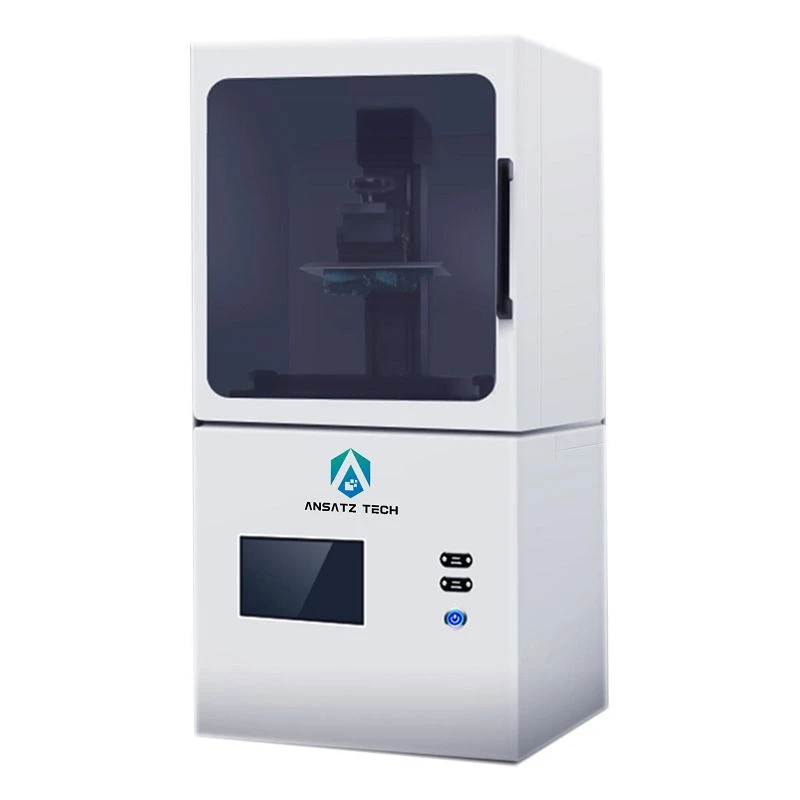
In the dental industry, 3D printing has become an indispensable tool. 3D Printer technologies such as SLA, DLP, and FDM are used for various applications. For example, SLA and DLP printers are used to create dental models, crowns, and bridges with high precision and excellent surface finishes. FDM printers can be used for the production of dental aligners and custom trays.
In addition to 3D printers, other digital dental equipment such as Milling Machine with Automatic Disc Changer and 5 - axis Milling Machine for Dry and Wet Machining play important roles in the digital dental workflow. These machines can be used to mill dental restorations from blocks of materials, providing an alternative to 3D printing for certain applications.

Conclusion
The world of 3D printing is vast and diverse, with each type of 3D printer offering unique advantages and capabilities. Whether you are a hobbyist looking to create your own designs, a manufacturer in need of rapid prototyping, or a dental professional seeking high - precision models, there is a 3D printing technology that can meet your needs.
As a 3D printer supplier, I am committed to providing high - quality products and excellent customer service. If you are interested in learning more about our 3D printers or have specific requirements for your projects, I encourage you to reach out to us for a detailed discussion. We can help you choose the right 3D printer and materials for your application, and provide support throughout the purchasing process and beyond.
References
- Gibson, I., Rosen, D. W., & Stucker, B. (2010). Additive Manufacturing Technologies: Rapid Prototyping to Direct Digital Manufacturing. Springer.
- Wohlers, T. (2021). Wohlers Report 2021: 3D Printing and Additive Manufacturing State of the Industry. Wohlers Associates.
- Hopkinson, N., Hague, R., & Dickens, P. (2006). Rapid Manufacturing: An Industrial Revolution for the Digital Age. Wiley.