


Marginal adaptation is a critical factor in the success of dental restorations. It refers to the degree of fit between the restoration and the tooth structure at the margin. A good marginal adaptation helps prevent leakage of bacteria, fluids, and debris, which can lead to secondary caries, pulpitis, and restoration failure. In this blog, as a supplier of Dental Glass Ceramic, I will compare the marginal adaptation of dental glass ceramic restorations with other common dental restoration materials.

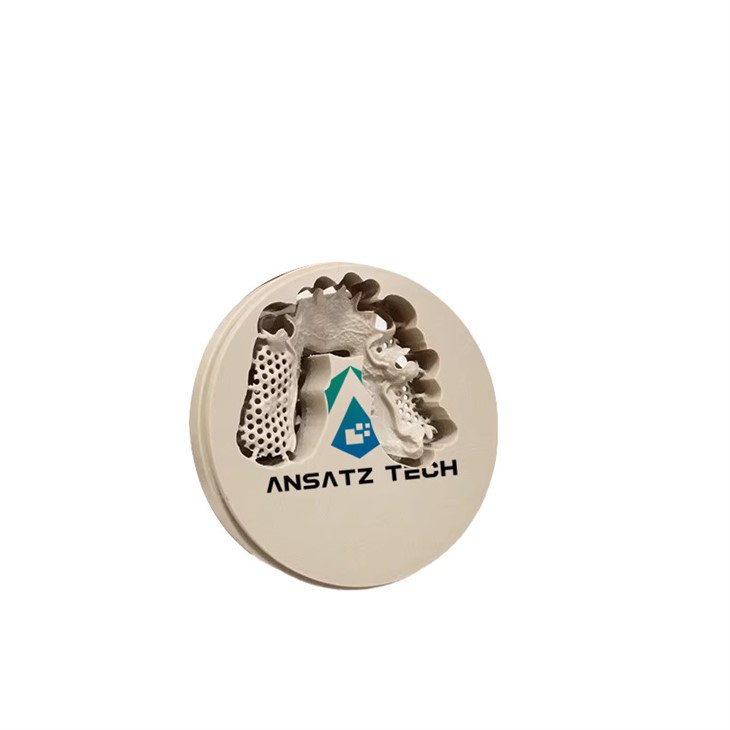
Dental Glass Ceramic Restorations
Dental glass ceramics are popular due to their excellent esthetics, biocompatibility, and mechanical properties. They can mimic the natural appearance of teeth and are resistant to wear and corrosion. In terms of marginal adaptation, dental glass ceramics offer several advantages.
The manufacturing process of dental glass ceramic restorations often involves CAD/CAM technology. This technology allows for precise design and fabrication of restorations, resulting in a high degree of accuracy. The digital workflow can capture the exact shape of the prepared tooth, and the restoration can be milled to fit the tooth precisely. For example, modern CAD/CAM systems can achieve marginal discrepancies within a very small range, usually less than 100 micrometers.
Another advantage of dental glass ceramics is their ability to be cemented effectively. The smooth surface of glass ceramics provides a good bonding interface with dental cements. When properly cemented, the restoration can form a tight seal at the margin, reducing the risk of marginal leakage.
Comparison with Dental WAX Restorations
Dental WAX is often used in the initial stages of dental restoration fabrication, such as creating wax patterns for cast restorations. However, when it comes to the final restoration, dental wax is not a permanent solution and has limitations in terms of marginal adaptation.
Dental wax is a soft material, and it can easily deform during handling and the casting process. This deformation can lead to inaccurate marginal fit of the final restoration. Even with careful handling, it is difficult to achieve a precise and consistent marginal adaptation with dental wax patterns. In addition, wax patterns are prone to shrinkage during the casting process, which can further increase the marginal discrepancy.
Compared to dental glass ceramics, dental wax restorations are not as reliable in maintaining a tight seal at the margin. The porous nature of wax also makes it more difficult to achieve a good bond with dental cements, increasing the risk of marginal leakage.
Comparison with Dental PEEK Restorations
Dental PEEK is a relatively new material in the field of dental restorations. It has good mechanical properties and is biocompatible. However, its marginal adaptation characteristics are different from those of dental glass ceramics.
PEEK has a lower elastic modulus compared to dental glass ceramics. This can result in more flexure under occlusal forces, which may affect the marginal fit over time. Although PEEK restorations can be fabricated with CAD/CAM technology, the material's inherent flexibility may cause the restoration to move slightly at the margin, leading to increased marginal leakage.
In terms of surface properties, PEEK may not bond as well to dental cements as dental glass ceramics. The smooth but less reactive surface of PEEK can make it more challenging to achieve a strong and durable bond at the margin. This can also contribute to a higher risk of marginal problems.
Clinical Significance of Marginal Adaptation
A good marginal adaptation is essential for the long - term success of dental restorations. Poor marginal adaptation can lead to a variety of clinical problems. For example, marginal leakage can allow bacteria to penetrate into the gap between the restoration and the tooth, causing secondary caries. Secondary caries can progress rapidly and may eventually lead to the failure of the restoration and the need for replacement.
In addition, marginal discrepancies can also affect the patient's comfort. A restoration with a poor marginal fit may cause irritation to the gingival tissue, leading to gingivitis and other periodontal problems. It can also affect the occlusal function, potentially causing premature wear of the restoration and the opposing teeth.
Factors Affecting Marginal Adaptation of Dental Glass Ceramic Restorations
Although dental glass ceramic restorations generally offer good marginal adaptation, several factors can still affect their fit. The accuracy of the tooth preparation is crucial. If the tooth is not prepared properly, it can be difficult to achieve a precise fit of the restoration. For example, an over - or under - prepared tooth can lead to marginal discrepancies.
The quality of the impression also plays an important role. A poor impression can result in an inaccurate model, which in turn affects the fabrication of the restoration. In addition, the skill and experience of the dental technician and the dentist in handling the CAD/CAM system and the cementation process can also influence the marginal adaptation of the restoration.
Conclusion
In conclusion, dental glass ceramic restorations generally offer better marginal adaptation compared to dental wax and dental PEEK restorations. Their precision in fabrication with CAD/CAM technology, good cementation properties, and ability to form a tight seal at the margin make them a reliable choice for dental restorations. However, it is important to note that achieving optimal marginal adaptation also depends on various factors, including proper tooth preparation, accurate impressions, and skilled handling during the restoration process.
If you are interested in high - quality Dental Glass Ceramic products for your dental practice or laboratory, we invite you to contact us for procurement and further discussions. We are committed to providing you with the best solutions for your dental restoration needs.
References
- Anusavice KJ, Shen C, Rawls HR. Phillips' Science of Dental Materials. 13th ed. Elsevier; 2013.
- Watts DC, Addy M. Dental Materials: Properties and Manipulation. 4th ed. Churchill Livingstone; 2008.
- Kakaboura AK, Eliades G, Eliades T. Marginal adaptation of CAD/CAM restorations: a systematic review. Journal of Dentistry. 2011;39(4):223 - 235.