


Yo, what's up everyone! As a supplier of Dental PMMA, I've been getting a lot of questions lately about the electrical conductivity properties of this material. So, I thought I'd take some time to break it down for you all.
First off, let's talk about what Dental PMMA is. PMMA stands for Polymethyl Methacrylate, and it's a type of acrylic resin that's commonly used in dentistry. It's known for its biocompatibility, aesthetic appeal, and ease of processing. You can find Dental PMMA in a variety of dental applications, like dentures, veneers, and orthodontic appliances.
Now, onto the main topic - electrical conductivity. In general, Dental PMMA is considered to be an insulator. That means it doesn't conduct electricity very well. This is actually a good thing in the dental field. When you think about it, our mouths are full of all sorts of electrical signals from our nerves. If Dental PMMA was a good conductor, it could interfere with these signals or even cause unwanted electrical currents in the mouth.
The reason why Dental PMMA is an insulator lies in its molecular structure. PMMA is made up of long chains of polymer molecules. These molecules are held together by covalent bonds, which are very strong and don't allow electrons to move freely. Since electrical conductivity is all about the movement of electrons, the lack of free - moving electrons in PMMA makes it a poor conductor.
But it's not always that simple. There are some factors that can affect the electrical conductivity of Dental PMMA. For example, if there are impurities or additives in the PMMA, it can change its electrical properties. Some additives might introduce free electrons or create pathways for electron movement, increasing the conductivity slightly.
Another factor is the environmental conditions. In a moist environment, like inside our mouths, there could be a very slight increase in conductivity. Water can act as a medium for the movement of ions, and these ions can carry a small amount of electrical charge. However, this increase is usually negligible and doesn't pose any real problems in dental applications.
Now, let's compare Dental PMMA with some other dental materials in terms of electrical conductivity.
Dental Glass Ceramic is another popular dental material. Glass ceramics are generally better insulators than PMMA. They have a very stable atomic structure, and the bonds between the atoms are even more restrictive to electron movement. This makes them ideal for applications where electrical insulation is crucial.
Dental PEEK is a high - performance polymer. PEEK has a relatively low electrical conductivity, similar to PMMA. However, its mechanical properties are often superior to PMMA, which makes it suitable for different dental applications, especially those that require more strength and durability.
Dental Resin is a broad term that includes many different types of resins. Some dental resins may have slightly different electrical conductivity properties depending on their composition. For example, some filled resins might have a different conductivity compared to unfilled ones. But in general, most dental resins are also insulators, just like PMMA.
So, why does the electrical conductivity of Dental PMMA matter? Well, as I mentioned earlier, it's important for the safety and functionality of dental appliances. If a dental material conducts electricity too well, it could cause problems like electrical shocks, interference with nerve signals, or corrosion due to electrochemical reactions.
As a supplier of Dental PMMA, I make sure that our products meet the highest standards in terms of electrical insulation. We use high - quality raw materials and advanced manufacturing processes to ensure that the PMMA we supply has consistent and reliable electrical properties.

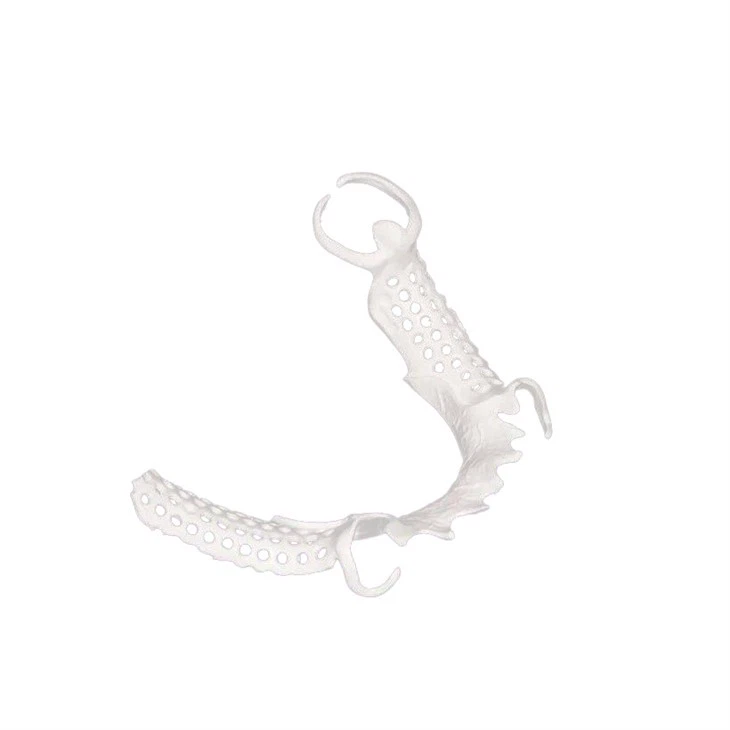
If you're in the dental industry and looking for a reliable Dental PMMA supplier, I'd love to talk to you. Whether you're a dental lab, a clinic, or a manufacturer, we can provide you with top - notch Dental PMMA that meets your specific needs. Our PMMA is not only great in terms of electrical conductivity but also offers excellent mechanical and aesthetic properties.
So, if you're interested in learning more about our Dental PMMA products or want to start a procurement discussion, don't hesitate to reach out. I'm here to answer all your questions and help you find the best solution for your dental applications.
References
- "Dental Materials Science" - A comprehensive textbook on dental materials and their properties.
- Journal of Dental Research - Articles on the latest research in dental materials, including studies on electrical conductivity.