


Hey there! As a 3D printer supplier, I often get asked about the differences between SHS (Selective Heat Sintering) and SLS (Selective Laser Sintering) 3D printers. These two types of 3D printers might seem similar at first glance, but they've got some key differences that can make a big impact on your printing projects. So, let's dive in and break down what sets them apart.
How They Work
Let's start with how these printers operate. SLS 3D printers use a high - power laser to sinter (or fuse) powdered materials together. The laser scans across a thin layer of powder, melting and bonding the particles where needed to create a cross - section of the 3D model. After each layer is completed, a new layer of powder is spread over the top, and the process repeats until the entire object is formed.
On the other hand, SHS 3D printers use a heated thermal printhead instead of a laser. The printhead moves across the powder bed, applying heat to selectively sinter the powder. This is a bit like using a hot iron to fuse things together, but in a very precise and controlled way.
The method of applying heat is a major difference here. Lasers in SLS can be incredibly precise, able to target very small areas of the powder bed. This precision allows for the creation of highly detailed and complex parts. The heated printhead in SHS, while also quite accurate, may not have the same level of pinpoint accuracy as a laser. However, it can be a simpler and more cost - effective solution in some cases.
Materials They Can Use
The materials that these printers can handle also vary. SLS printers are known for their versatility when it comes to materials. They can work with a wide range of powders, including various plastics like nylon, polycarbonate, and even some metals and ceramics. This makes SLS ideal for creating functional prototypes, end - use parts, and components with specific mechanical properties. For example, nylon parts made with SLS are strong, lightweight, and have good chemical resistance, which is great for applications in the automotive or aerospace industries.

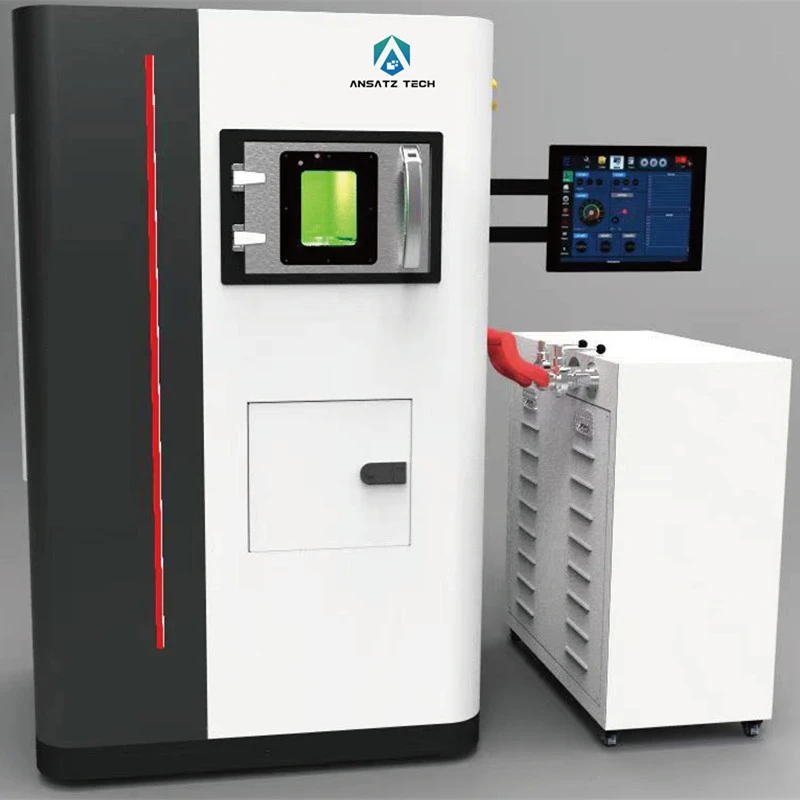
SHS printers, on the other hand, are more commonly used with thermoplastic powders. These are typically easier to work with using a thermal printhead. While the material range is not as extensive as that of SLS, thermoplastic materials still offer a lot of advantages. They are often more flexible and can be used for creating parts like consumer products, toys, or small - scale prototypes.
If you're looking to print with a variety of materials, especially metals or ceramics, then an SLS printer might be the way to go. But if you mainly need to work with thermoplastics, an SHS printer could be a more suitable option.
Cost Considerations
Cost is always a big factor when choosing a 3D printer. SLS printers tend to be more expensive upfront. The laser system, along with the complex control and calibration mechanisms, adds to the overall cost of the machine. Additionally, the maintenance of an SLS printer can be costly. Lasers need to be regularly serviced, and the powder handling systems also require careful upkeep.
SHS printers are generally more affordable. The heated printhead technology is simpler and less expensive to manufacture. They also tend to have lower operating costs. Since they don't rely on a high - power laser, the energy consumption is often lower. This makes SHS printers a great option for small businesses or hobbyists who are on a budget.
However, it's important to note that the cost of materials can also vary. Some of the high - performance powders used in SLS printers can be quite pricey. So, you need to factor in both the cost of the printer and the ongoing material expenses when making your decision.
Speed and Productivity
In terms of speed, SLS printers can be quite fast, especially when it comes to large - scale production. The laser can sinter large areas of the powder bed quickly, allowing for the rapid creation of multiple parts at once. Some industrial - grade SLS printers are designed for high - volume production and can produce a large number of parts in a relatively short period.
SHS printers, while they can also be efficient, may not have the same level of speed as SLS printers for large - scale jobs. The heated printhead moves across the powder bed at a certain rate, and this process can be a bit slower, especially when creating large or complex parts. However, for small - scale projects or single - part production, the speed difference may not be as noticeable.
If you have a high - volume production requirement, an SLS printer is likely to be more productive. But if you're mainly doing small - batch or one - off prints, an SHS printer can still get the job done in a reasonable amount of time.
Surface Finish and Quality
The surface finish and overall quality of the printed parts can also differ between SHS and SLS printers. SLS - printed parts often have a slightly rougher surface finish due to the nature of the sintering process. The powder particles may not fuse together perfectly, leaving some texture on the surface. However, post - processing techniques such as sanding, polishing, or vapor smoothing can be used to improve the finish.
SHS - printed parts can have a smoother surface finish in some cases. The heated printhead can create a more uniform bond between the powder particles, resulting in a nicer surface appearance. But again, the quality can depend on factors like the type of powder used and the settings of the printer.
If surface finish is a critical factor for your project, you may need to do some testing with both types of printers to see which one meets your requirements.
Applications
Both SHS and SLS 3D printers have a wide range of applications. SLS printers are commonly used in industries such as automotive, aerospace, and medical. In the automotive industry, they can be used to create custom - made parts, prototypes, and even production - ready components. In the aerospace sector, the ability to use high - performance materials makes SLS ideal for creating lightweight and strong parts. In the medical field, SLS can be used to produce patient - specific implants and surgical tools.
SHS printers are more popular in consumer product design, hobbyist projects, and small - scale manufacturing. They can be used to create toys, jewelry, and other consumer - oriented products. The lower cost and ease of use make them accessible to a wider audience.
If you're interested in exploring 3D printing further, you might want to check out our 3D Printer offerings. We also have Dental Laboratory Scanners and Dental Metal 3D Printer options for those in the dental industry.
Conclusion
So, in summary, SHS and SLS 3D printers have their own unique features and advantages. SLS printers offer high precision, a wide range of materials, and high - volume production capabilities but come with a higher cost. SHS printers are more affordable, use simpler technology, and are well - suited for small - scale projects and thermoplastic materials.
If you're still not sure which type of printer is right for your needs, don't hesitate to reach out. We're here to help you make the best choice for your specific requirements. Whether you're a large - scale manufacturer or a hobbyist, we've got the expertise and the products to support your 3D printing journey. Contact us to start a conversation about your procurement needs and let's find the perfect 3D printer for you.
References
- Gibson, I., Rosen, D. W., & Stucker, B. (2015). Additive Manufacturing Technologies: 3D Printing, Rapid Prototyping, and Direct Digital Manufacturing. Springer.
- Wohlers, T., & Wohlers, T. A. (2020). Wohlers Report 2020: 3D Printing and Additive Manufacturing State of the Industry. Wohlers Associates.